
How to collimate a telescope
Lining up mirrors so stars focus to a point.
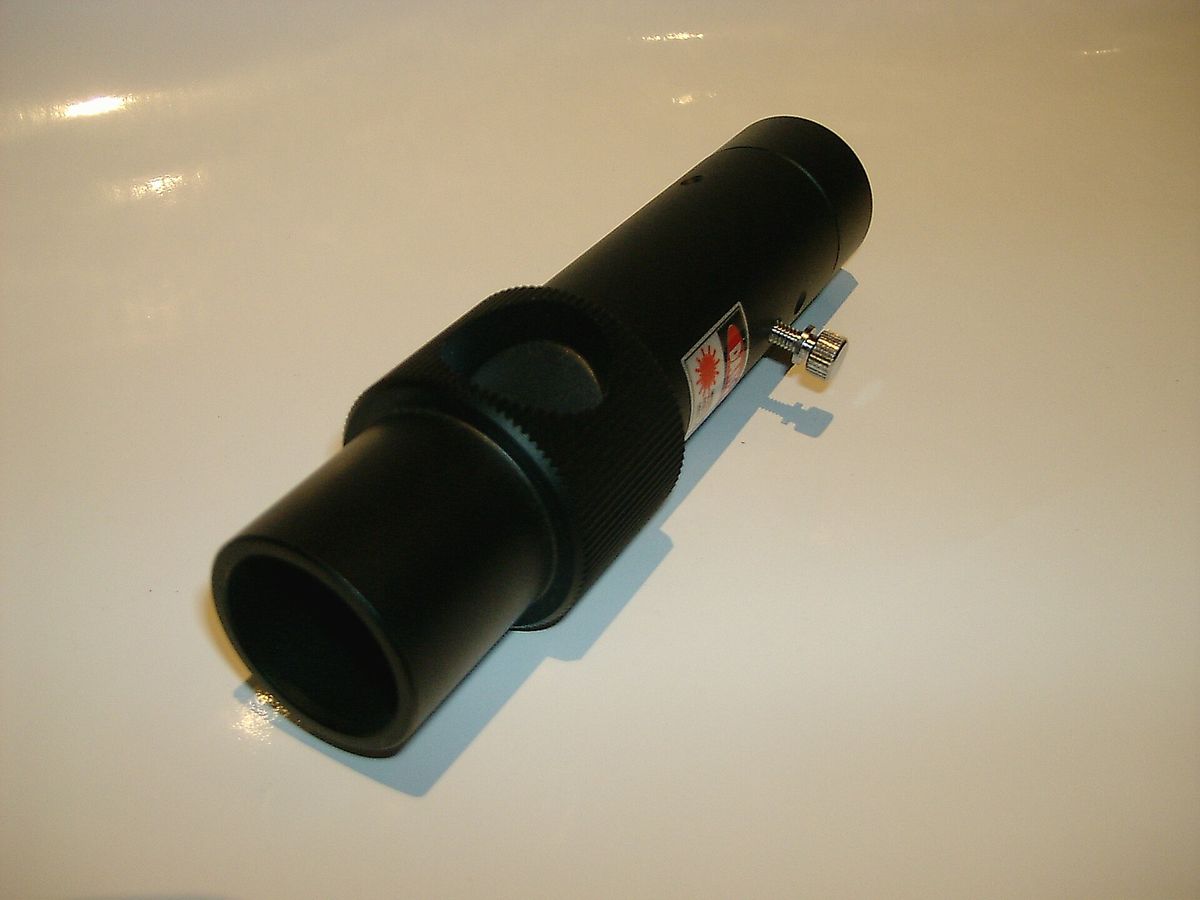
Collimation means lining up the mirrors so stars focus to a point. Reflectors and Schmidt-Cassegrains need it; most refractors do not for normal use.
Why it matters
If the optics are tipped relative to each other, stars look flared or comma-shaped even when the focuser is sharp. Planetary detail softens. Collimation is a mechanical alignment, not a cleaning step and not a brand defect.
Newtonian and Dobsonian
You adjust the primary and secondary mirrors with small screws or knobs on the cells. A bright defocused star (or a collimation eyepiece / Cheshire) shows whether the rings are concentric. Check after transport; a gentle bump can shift a mirror.
Schmidt-Cassegrain
Most SCT owners only tip the secondary mirror with three screws on the corrector hub. Factory collimation often holds until the tube is jarred. Make tiny turns and re-center a defocused star's shadow.
When to stop
If stars look round inside and outside focus and planetary disks are steady on a good night, you are close enough. Do not chase perfection under poor seeing. Skip collimation talk for a closed-tube refractor unless a repair shop has opened the cell.
The Dobsonian and SCT type pages note that collimation matters. Open the view simulator to compare apertures once the tube is aligned.
Questions
Do refractors need collimation?
Not for normal use. Closed-tube refractors stay aligned unless a cell is disturbed in repair.
How often should I collimate a Dobsonian?
Check after transport or a bump. Many sessions need only a quick look at a defocused star.
Related tools: chooser, simulator, calculator.
Sources
- Celestron, SCT and EdgeHD Collimation Guide (retrieved 2026-11-24)
- Sky & Telescope, How to Choose Your First Telescope (reflector collimation note) (retrieved 2026-11-24)