Telescope eyepieces
Focal length, apparent field, Plossls, and what to buy first.
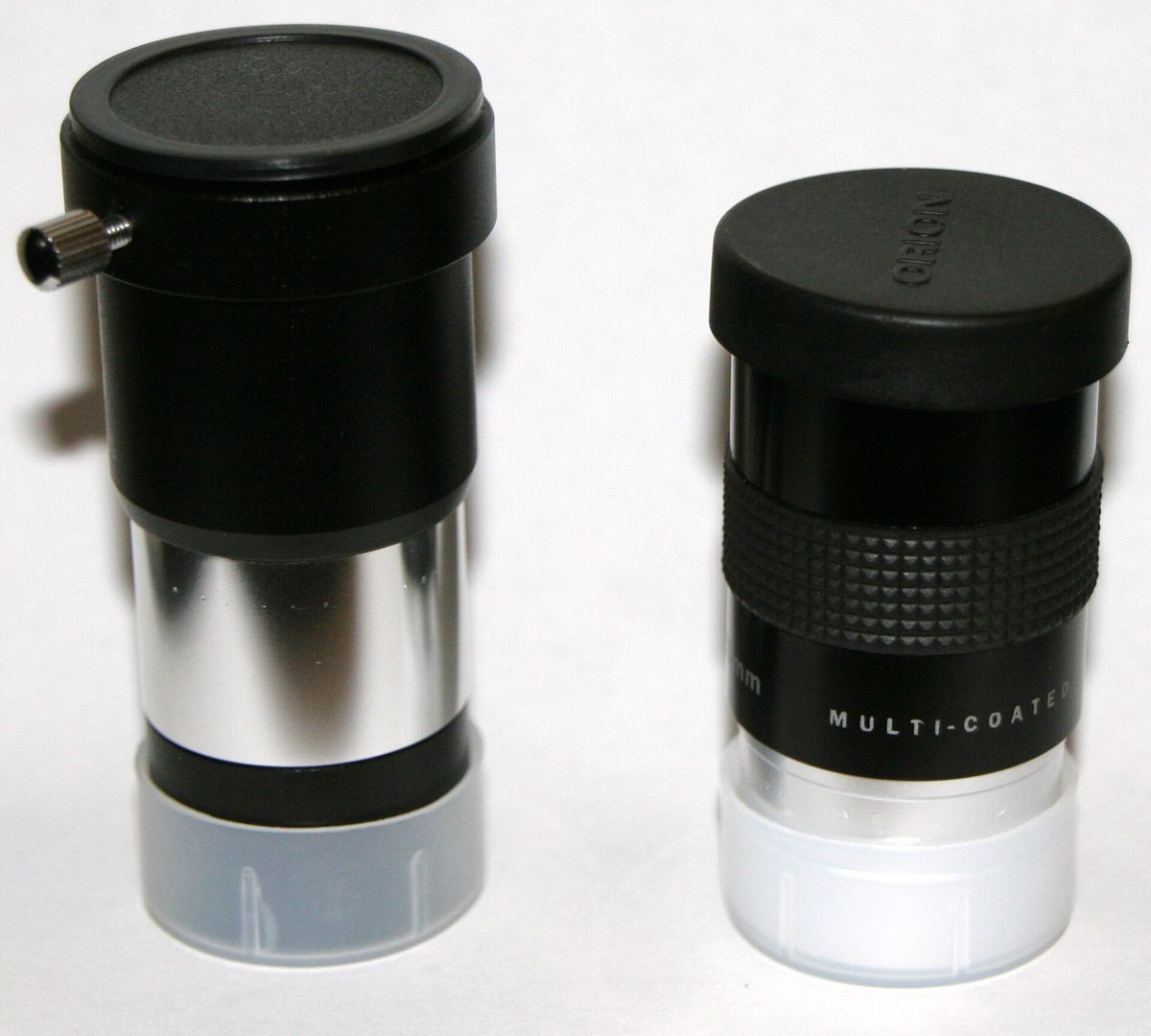
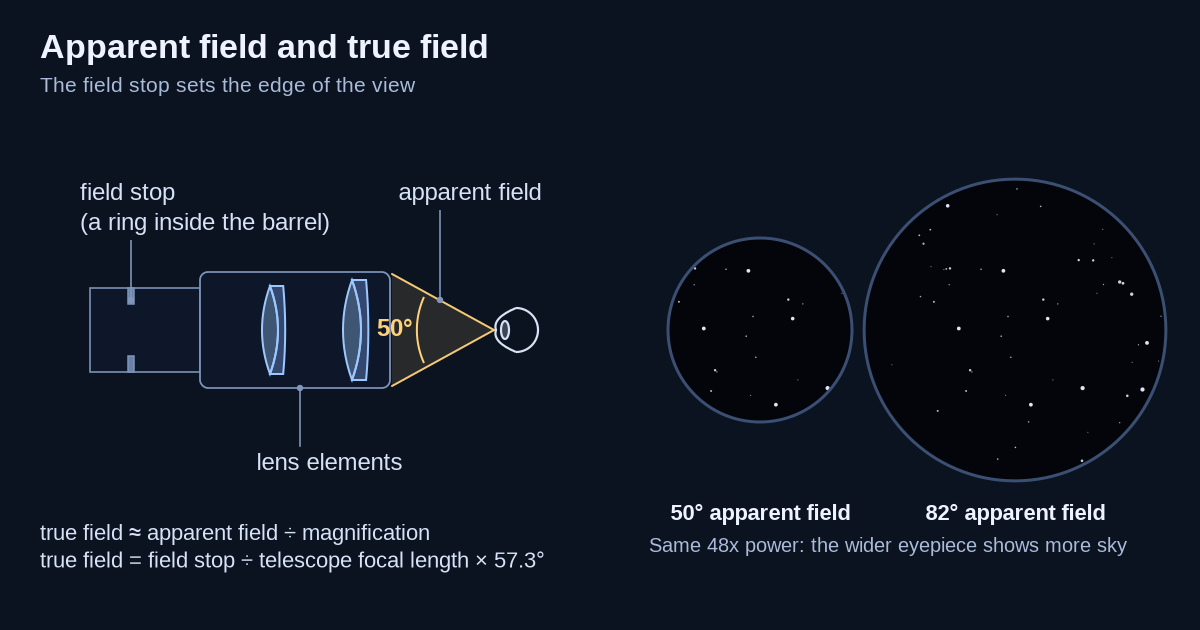
An eyepiece is the optic you look through. Its focal length, with the telescope's focal length, sets magnification. Its apparent field (or field-stop diameter) sets how wide the true sky patch looks.
The two numbers that matter
Magnification is M = F_telescope / F_eyepiece. A 700 mm telescope with a 25 mm eyepiece gives 28x. A Barlow multiplies that further.
True field of view is about TFOV ≈ AFOV / M. When you know the field-stop diameter, prefer TFOV = (field_stop / F_telescope) × 57.3°. The approximate method can be off by about 10% because of distortion.
Plossl and starter sets
A 25 mm or 32 mm Plossl (about 50° apparent field) is a common first eyepiece. Add a shorter eyepiece for planets once you can nudge the scope smoothly to follow a planet at higher power. Most beginner alt-az and Dobsonian mounts are moved by hand; they do not track on their own. Wide-field eyepieces cost more and help most on rich star fields and large objects like the Moon or M42.
Exit pupil
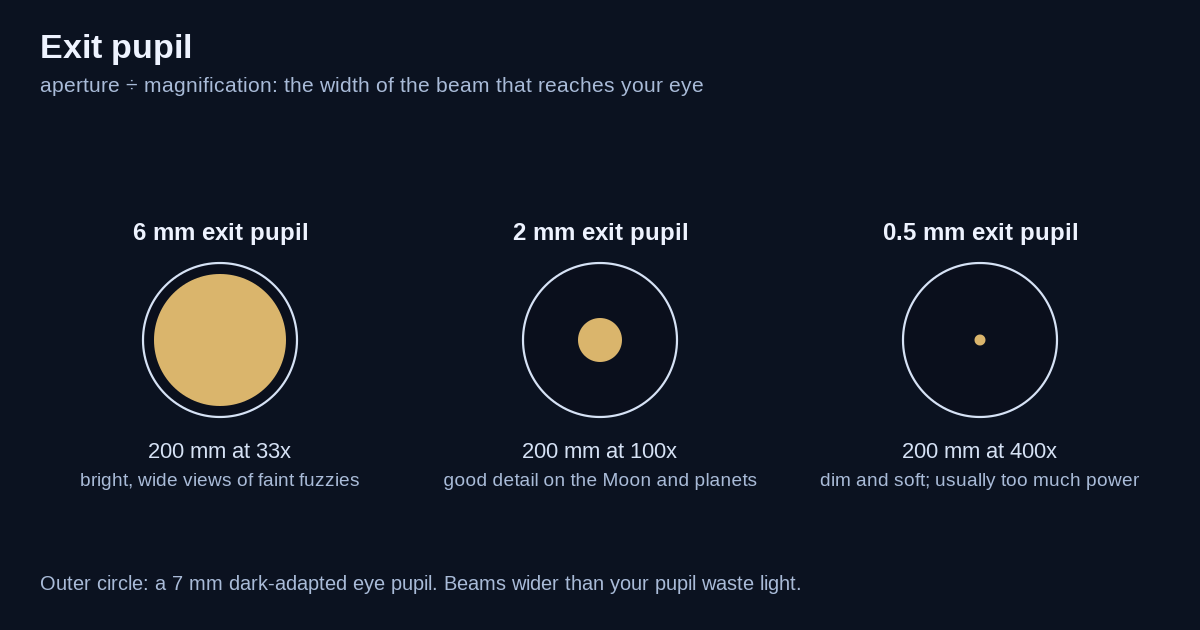
Exit pupil is D / M, or F_eyepiece / (f-ratio). If it is larger than your eye pupil, you waste light. With reflectors and SCTs, very large exit pupils also make the secondary mirror's shadow noticeable. If it is tiny (near 0.5 mm), the view gets dim and floating artifacts become annoying.
Work the numbers on the magnification and FOV calculator. Then open the view simulator with the same eyepiece.
Questions
What eyepiece should I buy first?
A medium Plossl around 25 mm is a common starter. Add a shorter eyepiece for planets once you can nudge the scope smoothly to follow a planet at higher power.
What does apparent field of view mean?
Apparent field is the angular width of the view as the eyepiece presents it. True field is roughly apparent field divided by magnification.
Related tools: chooser, simulator, calculator.
Sources
- Tele Vue, Choosing Eyepieces (Basic) (retrieved 2026-11-24)
- Tele Vue, Telescope Formulas / Common Telescope Myths (retrieved 2026-11-24)